


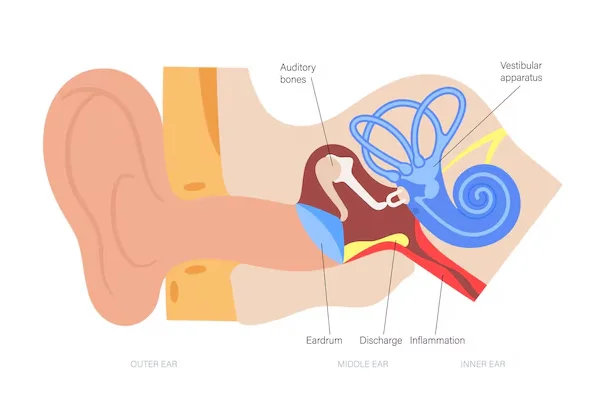
| Category | Chronic Otitis Media |
Ear Discharge (Chronic Otitis Media)
What Is Chronic Otitis Media?
Chronic Otitis Media means a long-standing ear infection or repeated ear discharge from the middle ear. In many patients, there is a small hole (perforation) in the eardrum through which infection and discharge occur repeatedly. Ear discharge may come and go over months or even years if not properly treated.
Why Does Ear Discharge Happen?
The middle ear is connected to the nose through a small tube called the Eustachian tube. Repeated infections, poor ventilation of the ear, allergies, sinus infections, or childhood ear infections can lead to:
• Damage to the eardrum
• Persistent perforation (hole)
• Recurrent infection and discharge
Sometimes water entering the ear can also trigger infection.
Common Symptoms
Patients with Chronic Otitis Media may experience:
• Ear discharge (watery, yellow, or foul-smelling)
• Reduced hearing
• Ear blockage sensation
• Recurrent ear infections
• Ear pain during active infection
• Ringing sound in the ear (tinnitus)
• Occasionally dizziness or imbalance
Is Ear Discharge Dangerous?
Many cases are treatable and improve well with proper care.
However, long-standing, untreated ear infections can sometimes lead to:
• Progressive hearing loss
• Persistent infection
• Spread of infection to nearby bone (mastoid)
• Rare but serious complications in advanced disease
What Is Cholesteatoma?
In some patients, chronic ear disease may lead to a condition called cholesteatoma. This is an abnormal skin growth inside the ear that can slowly damage nearby structures.
Warning signs may include:
• Foul-smelling discharge
• Persistent infection despite treatment
• Progressive hearing loss
• Dizziness
• Facial weakness (rare)
Cholesteatoma usually requires surgery.
How Do We Evaluate Chronic Ear Discharge?
Evaluation may include:
• Detailed ear examination under microscope or endoscope
• Hearing test (audiometry)
• Ear cleaning (aural toilet)
• CT scan in selected patients with complicated disease or cholesteatoma suspicion
How Is Chronic Otitis Media Treated?
Medical Treatment:
• Ear cleaning
• Antibiotic ear drops
• Medicines for infection
• Water precautions
• Treatment of associated nose or sinus problems
Keeping the ear dry is extremely important.
Important Ear Care Instructions
Patients should:
• Avoid water entering the ear during bathing
• Avoid self-cleaning with earbuds or objects
• Avoid putting oil or home remedies into the ear unless advised
• Complete prescribed treatment properly
Surgical Treatment
If the eardrum perforation persists or infections continue repeatedly, surgery may be advised.
Common surgeries include:
Tympanoplasty:
Surgery to repair the hole in the eardrum and improve hearing.
Mastoid Surgery:
Required in patients with persistent infection or cholesteatoma involving the mastoid bone behind the ear.
What Are the Benefits of Surgery?
Surgery may help:
• Stop recurrent ear discharge
• Improve hearing
• Prevent repeated infections
• Prevent progression of disease
• Improve quality of life
Can Hearing Improve?
Yes. Many patients experience hearing improvement after proper treatment or surgery, although the extent of improvement depends on:
• Duration of disease
• Degree of ear damage
• Condition of hearing bones inside the ear
Important Reassurance for Patients
Most cases of chronic ear discharge can be successfully managed with proper treatment and follow-up. Early evaluation helps prevent long-term hearing problems and complications. Our goal is to provide safe treatment, preserve hearing, and achieve a dry, healthy ear whenever possible.